








In an update to reporters on Friday, Health Canada says more than one million bottles of a foreign supply of children’s medication will arrive in the country by next week.
More than one million bottles of children’s pain reliever medication will arrive in Canada as of next week, the federal government said in an update on drug shortages that have plagued the country.
Chief Medical Adviser Dr. Supriya Sharma told reporters Friday that Health Canada is exploring “all levers” at it’s disposal to remedy the situation and understand this is a “very challenging” situation for parents and health-care providers.
“While drug shortages continue to make headlines, we are working tirelessly behind the scenes to end the shortages. It'll take time, but things will get better as we start to see the results of increased production of Canadian acetaminophen and ibuprofen products supplemented by the flow of foreign products coming into the country,” she said.
The supply will be given to hospitals, community pharmacies and retailers and begin appearing on store shelves by early next week, said Sharma.
Three major viruses circulating now — RSV, influenza and COVID-19 – are leading to packed hospitals and overcrowded pediatric ICU units, particularly in Ontario.
Jen Belcher, an Ottawa-based pharmacist and the vice president of strategic initiatives and member relations at the Ontario Pharmacist Association, told CTV’s Your Morning on Friday that the shortages could continue for months.
“Commonly used antibiotics for chest-infections, ear-infections….that’s been a real challenge for parents [to find] as they navigate the respiratory virus season with very few options,” she said.
The reasons for the shortages are “complex”, that include a combination of demand, interruptions to the supply chain, and manufacturing disruptions, she said, suggesting that drug manufacturing needs to be prioritized moving forward.
Drugs in critically low supply, meaning there are very few or no alternative therapies available, which include eye drops after glaucoma surgeries, it becomes “very challenging” to manage, she said.
The federal government announced Monday it has procured an incoming supply of children’s medication from international sources. Health Canada said the supply will be available for purchase in the coming weeks.There are 800 drugs that are in short supply, and 23 that are critically low levels, according to the agency.
But the size of the supply is unclear and the agency declined to provide more information to CTVNews.ca.
In the midst of the several illnesses circulating, Ottawa has been under increased pressure from provinces and the federal opposition to take action on the medication shortages. The Conservatives have been urging the feds to to allow the sale of foreign-language label medications.
Health Canada said that as it pertains to the incoming supply, “all information related to cautions and warnings, dosing directions, ingredients, and other important details will be made available in both English and French to ensure parents and caregivers clearly understand what medication they are using and how to give to their children.”While those debates occur, families are struggling. One family from the Kitchener, Ont. region saw their two-year-old son almost transferred to a U.S. hospital due to a provincial shortage of pediatric beds.
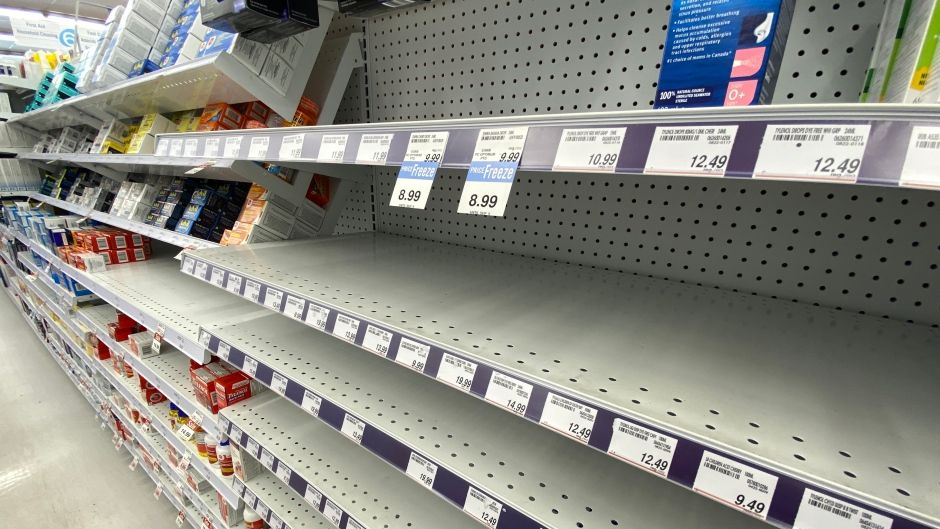
Many shelves at pharmacies have been left bare, running out of children’s allergy medication, children’s pain relievers, and now adult cough and cold syrup, eye drops and some oral antibiotics, according to industry experts.
Multiple pharmacists across Canada have said the issue is only continuing to worsen.
"The pharmacy teams are working hard to try to find other options for patients but that's becoming increasingly difficult,” said Pam Kennedy, pharmacist and owner of the Bridgewater Guardian Pharmacy on Nova Scotia's South Shore, said in an interview with The Canadian Press on Tuesday.
A third of prescription drugs are currently on back order, she said. Drug brands have also indicated that these shortages could last well into 2023, she added.
Pharmacists have described parents as “desperate” for medication and some have called for increased masking protocols to stem the rising infections.
Belcher told CTV Ottawa last month that the loosening of health restrictions to limit spread, including masking, has caused illnesses to increase earlier.
For parents caring for sick children during the drug shortages, she recommends contacting the child’s health-care provider with concerns about fever and other symptoms. Maintain good hydration and ensure they get rest, she said.
But not having the appropriate antibiotics for children is concerning, she told CTV Toronto on Thursday.
“We’ve been having to work with parents and prescribers using adult products and adapting them for children’s use. Or switching to alternative antibiotics,” she said.
With files from The Canadian Press, CTV Toronto, CTV Kitchener, and CTV News Senior Digital Parliamentary Reporter Rachel Aiello