








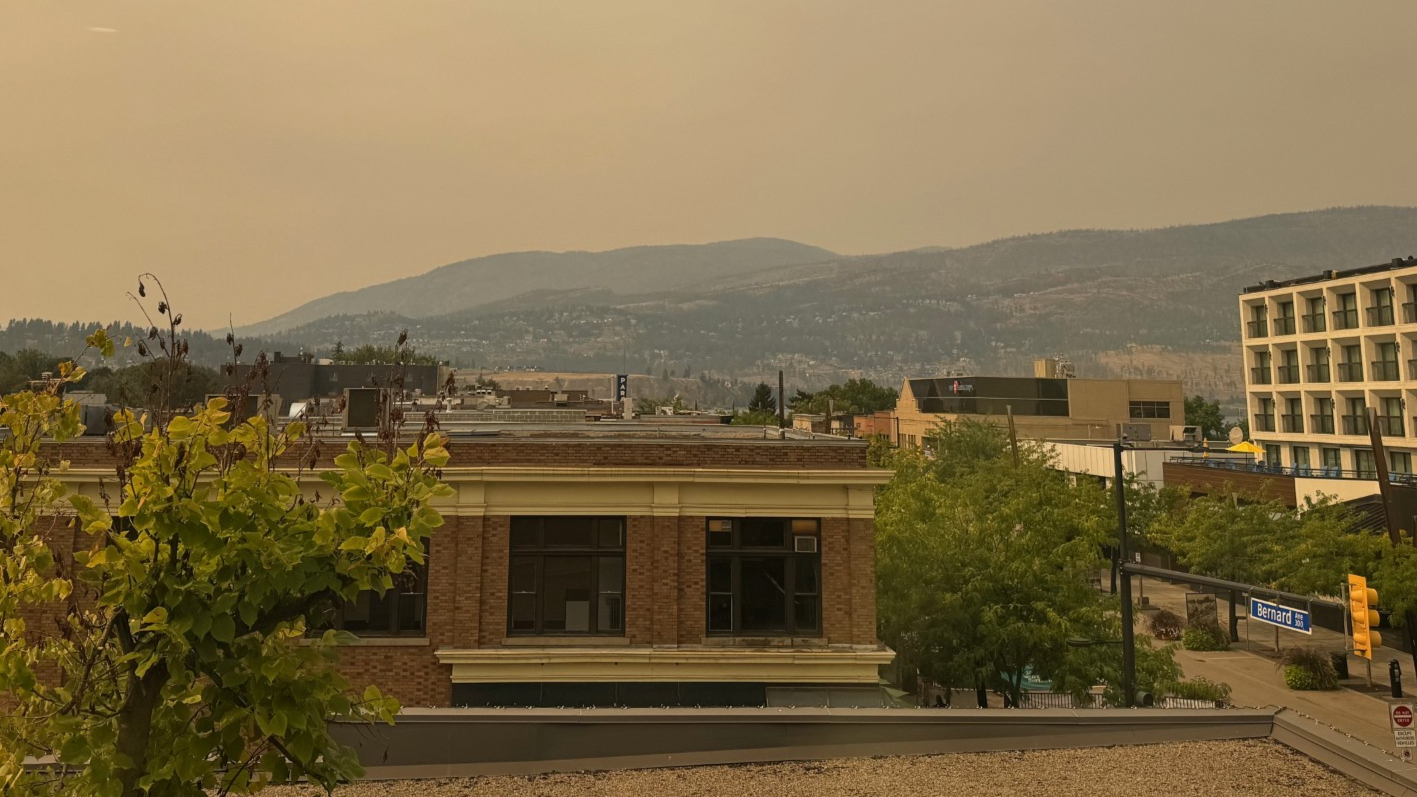

Interior Health air quality warning guidance
People throughout the Interior are reminded to stay safe from the impacts of poor air quality due to wildfire smoke in the region. The Province of British Columbia has issued air quality warnings for multiple areas across Interior Health.
Those with chronic conditions such as asthma, heart disease or diabetes, as well as pregnant women, infants and young children are most affected by wildfire smoke.
The best way to protect your health from wildfire smoke is to reduce your exposure to smoke and seek cleaner air.
During smoky conditions:
- Stay indoors: Reduce time spent outside to protect your health.
- Consider wearing a well-fitted respirator if you cannot access cleaner air: Use a well fitted respirator (e.g., N95, KN95) to reduce exposure to particulate matter in smoke.
- Activate medical management plans: Ensure your plan to self-manage any chronic diseases (e.g., respiratory and cardiovascular diseases) is in place and up-to-date, and that adequate rescue medications are available.
- Use a home clean air shelter: Spend time in a room in your home with a portable air cleaner with HEPA filtration to reduce smoke exposure. If you do not have access to this at home, you can find a location in your local community to take shelter in such as your community recreation centre or public library during periods of poor air quality.
Wildfire smoke and your mental health
Smoky skies can affect us physically and also make us feel anxious and stressed. There are actions we can take to help improve and manage our mental wellness through these stressful times.
- Manage stress: Use stress-relief techniques such as meditation or focusing on a creative outlet (e.g., journaling and art).
- Tap into social networks: Having conversations and spending time with people closest to us is especially important during emergencies and disasters.
- Take care: Eat well, exercise indoors, drink lots of water and get enough sleep.
- Help others: Assisting others can help us regain a sense of purpose and community as we confront challenges together. The Emergency Support Services Program welcomes and relies on volunteers to coordinate support services for people forced from their homes in an emergency.
Resources
- Visit the BCCDC wildfire smoke webpage to learn more about the health effects of wildfire smoke, how to prepare for wildfire season and more.
- For guidance on outdoor physical activity in smoky conditions, refer to the Air Quality Health Index or the University of Northern British Columbia’s local monitoring resource.
- For other steps to create cleaner air space at home, check out Health Canada’s online resource Guidance for Cleaner Air Spaces during Wildfire Smoke Events.
- To learn about the steps that you can take to prepare for a wildfire and manage wildfire-related issues before, during or after a wildfire please visit our wildfires webpage.
- Call 8-1-1 or your primary care provider if you’re experiencing more severe symptoms, such as shortness of breath or chest pain, or 9-1-1 if it’s a health emergency.
WorkSafeBC reminds employers to protect workers from wildfire smoke
With wildfire activity increasing in B.C., WorkSafeBC is reminding employers to take steps to protect workers from the health risks associated with wildfire smoke.
Wildfire smoke contains fine particulate matter, which can penetrate deep into the lungs and cause serious health effects — particularly for workers with underlying medical conditions or those doing physically demanding work outdoors.
“Exposure to wildfire smoke can lead to both short- and long-term health impacts,” says Todd McDonald, Head of Prevention Services at WorkSafeBC. “Employers need to assess the risks associated with wildfire activity, implement effective controls, and involve workers every step of the way.”
Conducting a risk assessment
Employers must assess the risk of wildfire smoke exposure in their workplaces and take steps to minimize harm. When conducting a risk assessment, consider:
- The worksite’s location and local weather conditions.
- The types of tasks workers are expected to perform.
- Emergency preparedness and response plans, including site-evacuation procedures.
- Input from workers on wildfire smoke risks and changing conditions.
Wildfire smoke can travel far beyond the fire zone. Employers should review the risk assessment each day before work begins — and again throughout the day — as air quality conditions may change rapidly, requiring adjustments to the plan.
Control measures for outdoor workers
Depending on the severity of smoke and the nature of the work, employers should consider:
- Monitoring local air quality advisories and alerts.
- Relocating or rescheduling work to avoid peak smoke conditions.
- Reducing physically demanding tasks when air quality is poor.
- Assigning alternate work to those more sensitive to smoke exposure.
- Providing appropriate respiratory protection, such as N95 respirators, where needed — ensuring they meet standards and are properly fit-tested.
Control measures for indoor workers
Employers should also take steps to reduce smoke exposure indoors, such as:
- Inspecting HVAC systems to ensure they are functioning properly and using clean filters.
- Temporarily reducing outdoor air intake (in consultation with a qualified HVAC technician or ventilation engineer.)
- Using portable air cleaners with high-efficiency filters in smaller indoor spaces.
- Advising workers who drive as part of their job to keep vehicle windows closed and use the “recirculate” setting on air conditioning systems.
Resources:
- Media Backgrounder: Wildfire season in B.C.: Worker safety and employer responsibilities.
- Frequently Asked Questions: Wildfire smoke.